


Views: 0 Author: Site Editor Publish Time: 2026-10-30 Origin: Site


Rigid vs Flexible Bronchoscope: Clinical Selection Guide
Many hospital procurement teams treat rigid and flexible bronchoscopes as an either-or option. In fact, they are complementary tools with distinct clinical roles. Mature interventional pulmonology centres commonly deploy both systems to cover routine diagnosis, elective therapy and emergency airway cases.
This guide compares their core features, clinical indications, learning curves and practical configuration suggestions to support your tender and department planning.
Built with a straight, large lumen, the rigid bronchoscope supports high-flow suction and accommodates large therapeutic instruments. It is the gold standard for high-risk airway emergencies and complex stent procedures.
Strengths
Reliable large suction channel for massive haemoptysis, helps control bleeding and prevents asphyxiation
Ideal for paediatric foreign body retrieval
Supports silicone and expandable stent placement, laser ablation and bulk tumour debulking
Maintains controlled ventilation during critical airway interventions
Limitations
Requires general anaesthesia and skilled intubation
Steep learning curve for operators
Higher risk in patients with cervical spine instability or aortic aneurysm
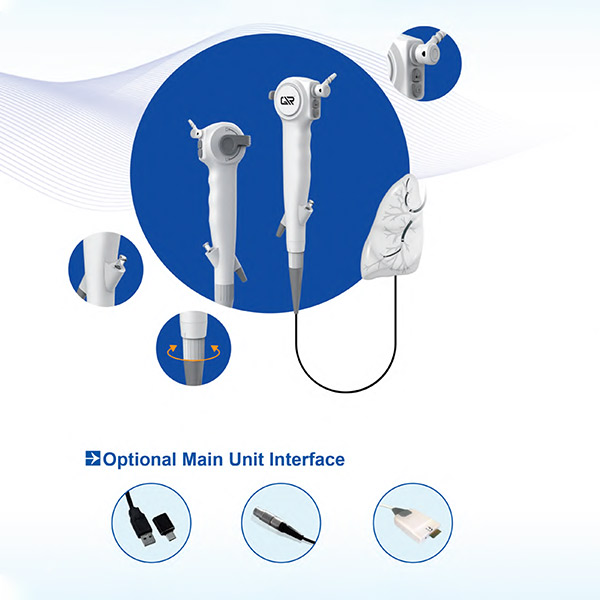
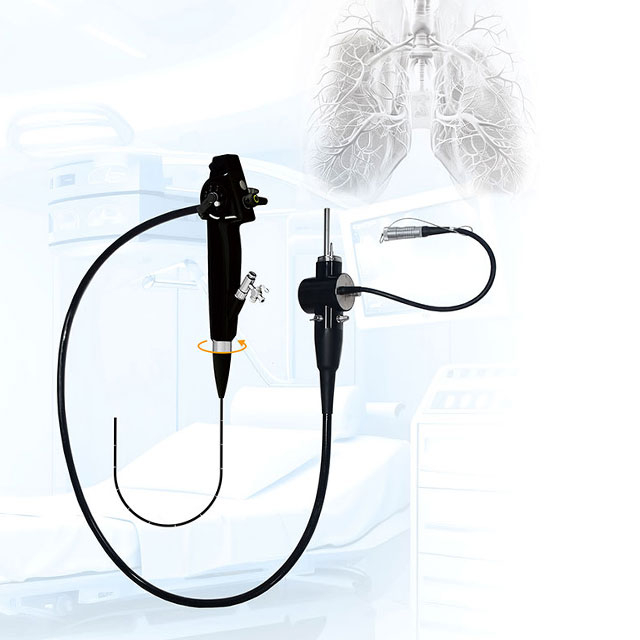
The steerable tip allows access to segmental and subsegmental bronchi. It can be performed under local anaesthesia in most outpatient settings, making it the daily workhorse for diagnostic pulmonology.
Strengths
Reaches peripheral lung lesions for biopsy, brush sampling and bronchoalveolar lavage
Safer for patients with cervical spine disorders or aortic pathologies
Suitable for patients who cannot tolerate general anaesthesia
Gentler insertion, shorter learning curve for most endoscopists
Limitations
Narrow working channel; large suction and bulky therapeutic instruments are restricted
Less effective for massive haemoptysis and large airway foreign body removal
Clinical Scenario | Rigid Bronchoscope | Flexible Bronchoscope |
|---|---|---|
Routine diagnostic biopsy & brush | △ Rarely used | ● First choice |
Sampling of peripheral pulmonary lesions | ✗ Hard to reach | ● First choice |
Massive / active haemoptysis | ● First choice (suction + ventilation) | △ Adjunct use |
Paediatric airway foreign body retrieval | ● First choice | △ Limited cases |
Silicone / expandable airway stenting | ● First choice | △ Selected models only |
Laser / electrocautery tumour debulking | ● Preferred (large channel) | △ Instrument-dependent |
Selective bronchoalveolar lavage | △ Rarely used | ● First choice |
Difficult airway, cervical disease, aortic aneurysm | ✗ High risk | ● First choice |
Airway intervention with ongoing ventilation support | ● First choice | △ Assisted use |
Legend: ● = First choice; △ = Optional / Adjunct; ✗ = Not recommended
There is no universal “better” scope. Your setup should match your case mix, operator training and emergency response requirements.
✅ Interventional airway centre (high-volume therapeutic cases) Dual configuration: rigid + flexible. Rigid bronchoscopy covers emergencies such as bleeding, foreign body and stent placement; flexible systems handle routine diagnostics and peripheral lesion sampling.
✅ Outpatient diagnostic-focused pulmonology department Flexible bronchoscope as the primary platform. One rigid unit may be reserved for emergency standby if the hospital receives urgent airway referrals.
✅ Paediatric hospital / paediatric interventional service Rigid bronchoscopy is essential. It remains the preferred tool for paediatric foreign body extraction and paediatric airway stenting.
✅ Training reminder before purchase Rigid bronchoscopy demands dedicated training and consistent case volume. Avoid capital investment without a trained team, which may lead to idle equipment.
Rigid and flexible bronchoscopes do not compete — they complement each other. Base your procurement decision on three factors: your department’s clinical spectrum, the team’s interventional competency and emergency airway demand. Optimise your equipment portfolio to cover high-priority clinical pathways.
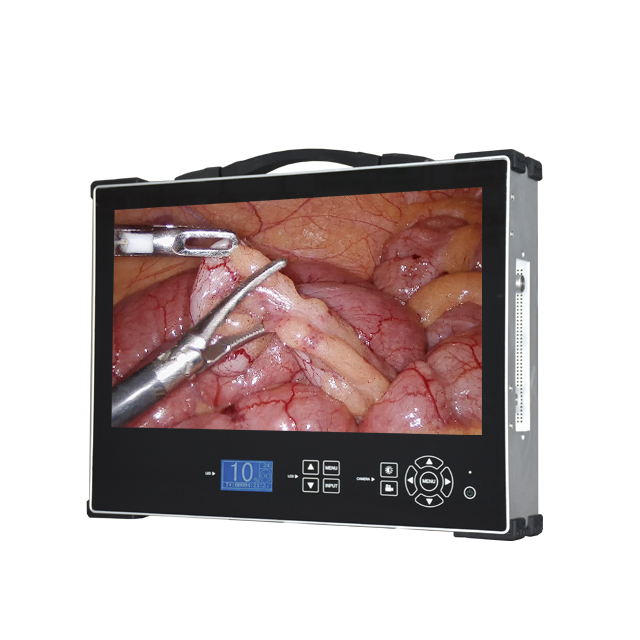
Need a matched bronchoscopy solution for your respiratory intervention suite? Contact us for technical consultation, compatibility check and quotation. We supply complete bronchoscopy imaging systems for global hospitals.